“Semantics is the brain of AI.” See what it means for you
Unwind DataUnwind Data

Semantic Interoperability

The Semantic Layer: Your Company's Universal Language

A semantic layer translates raw warehouse tables into business concepts: metrics, dimensions, and hierarchies that every tool and every AI agent can rely on. It's the difference between data that's stored and data that's understood.

The concept

What is a semantic layer?

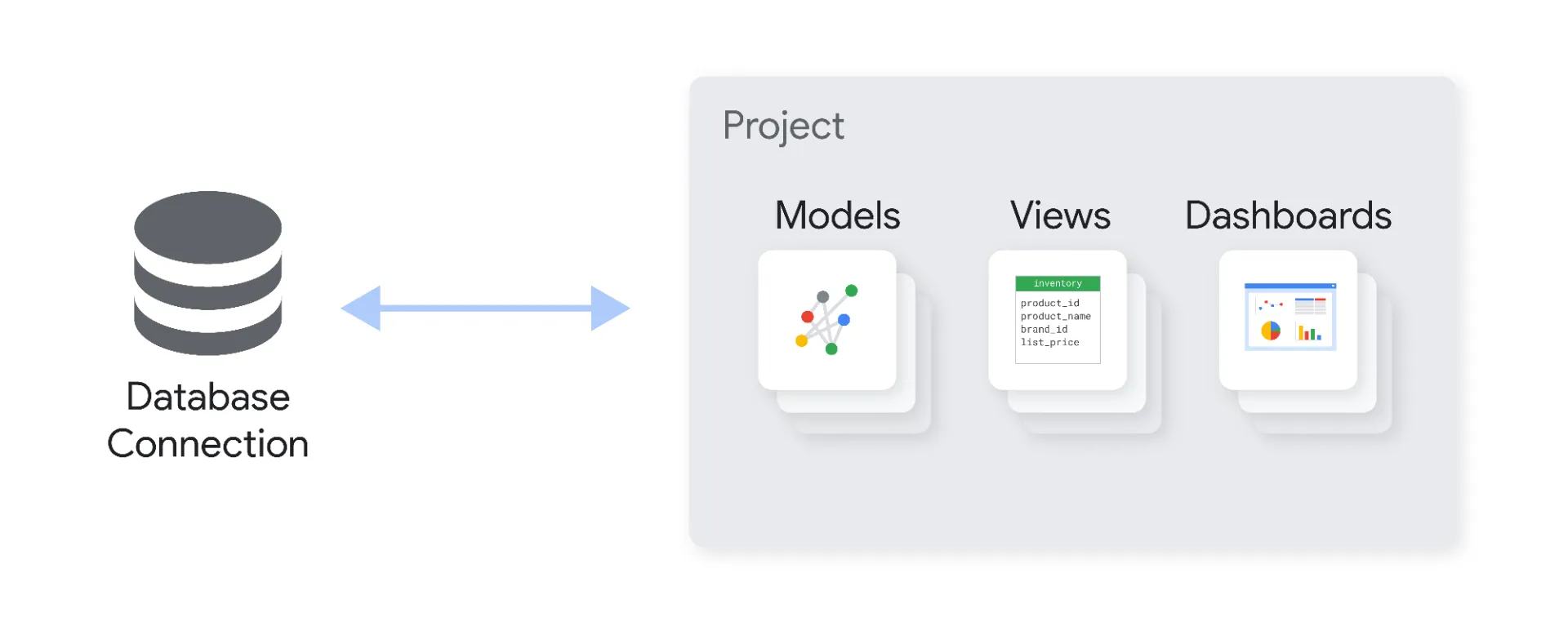
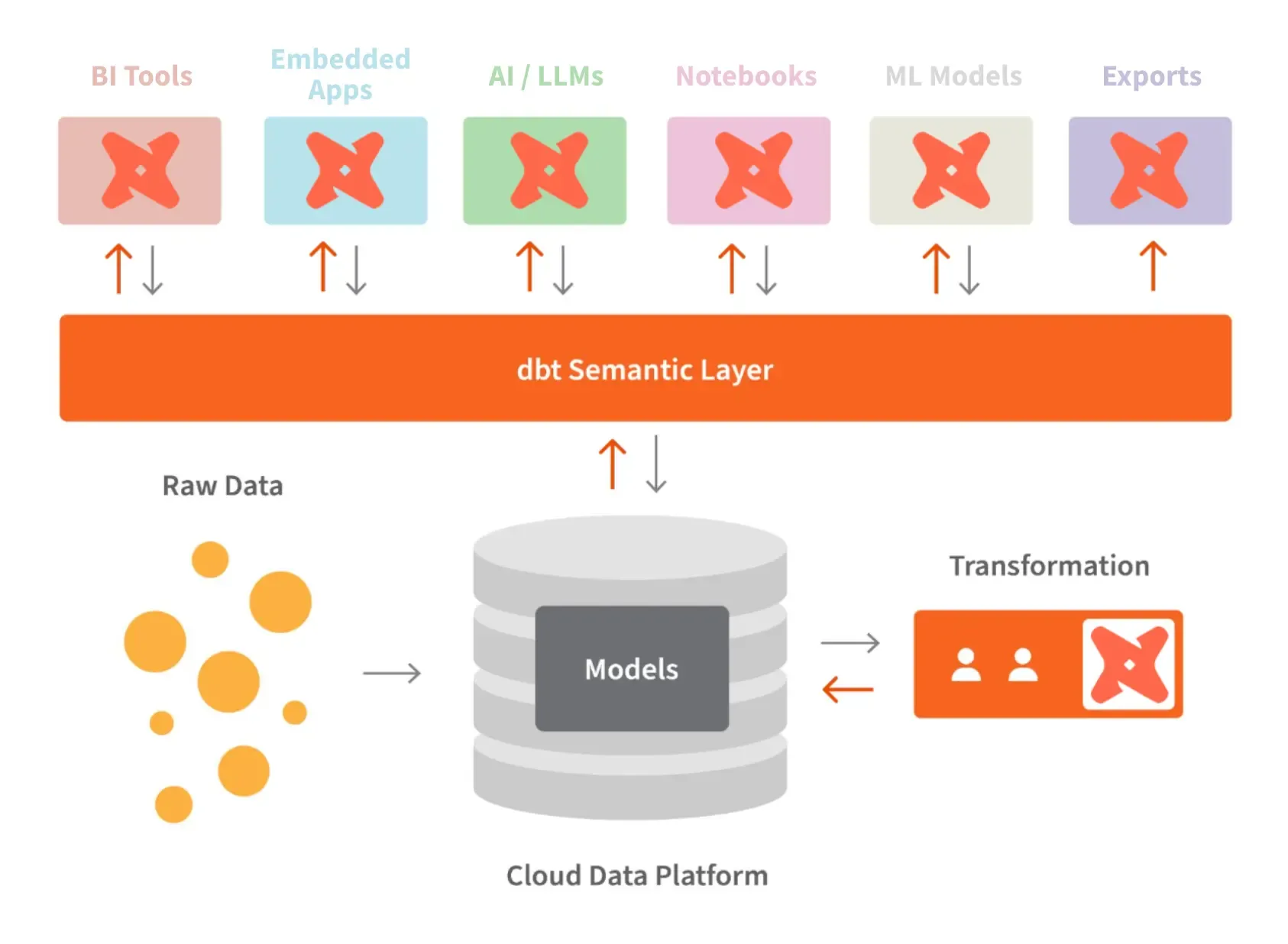
A semantic layer sits between your data warehouse and the tools that consume it. It defines business logic in one central, governed place: what “revenue” means, how “active customers” is calculated, which dimensions apply to which metrics.

Instead of every analyst, every BI report, and every AI agent re-implementing the same calculations independently (and getting different answers), the semantic layer acts as the single source of truth for what your data means.

In the AI era, this matters more than ever. LLMs don't inherently know what your business terms mean. A semantic layer gives them something to ground against, turning vague prompts into accurate, governed queries.

How it fits in your stack

BI ToolsOmni, Looker, Tableau, Metabase
AI Agents & LLMsChatGPT, Claude, custom agents
Data Apps & APIsNotebooks, dashboards, exports

Semantic Layer

Metrics · Dimensions · Governance · Business Logic

Data Warehouse (Snowflake, BigQuery, Databricks…)

Why it matters

Semantic interoperability in practice

One definition, everywhere

Revenue means the same thing in your BI dashboard, your AI chat interface, and your exported spreadsheet. No more metric drift between teams.

AI that queries meaning, not syntax

LLMs grounded in a semantic layer ask about business concepts, not raw SQL columns. The result is dramatically fewer hallucinations and wildly more accurate answers.

Governance without gatekeeping

Certified metrics live in one place. Any tool (BI, AI, notebooks, APIs) queries the same governed definitions. New tools get added without re-defining everything.

Interoperability by design

Your semantic layer becomes the translation layer between systems. Data warehouse, BI tool, AI agent, and data product all speak the same language.

The tooling landscape

Which semantic layer is right for you?

The market has several mature options, each with different tradeoffs on flexibility, governance, and BI integration. We're tool-agnostic and help you choose the right fit for your stack and team.

dbt Semantic Layer

Best for dbt-native stacks

Cube

API-first, highly flexible

LookML / Looker

Google ecosystem

Omni

BI + semantic in one

Metriql

Open-source option

Atscale

Enterprise-grade

Lightdash

dbt-powered BI

Custom builds

When off-the-shelf doesn't fit

Not sure which one fits your situation? Book a free 30-minute call and we'll give you an honest, vendor-neutral recommendation.

From the blog

Semantic layer resources

Gartner Semantic Layer Warning: AI Agents Will Fail Without Context
Semantic Layer9 min read

Gartner Semantic Layer Warning: AI Agents Will Fail Without Context

Gartner formally warned that skipping semantic foundations will cause AI agents to hallucinate, waste budget, and create governance risk. Practitioners already knew this. Here's what the context layer is and what building it actually requires.

How to Connect Your Semantic Layer to AI Agents: Architecture Guide
Semantic Layer18 min read

How to Connect Your Semantic Layer to AI Agents: Architecture Guide

AI agents connected directly to the warehouse break in production. Here is the vendor-neutral architecture guide for connecting your semantic layer to AI agents using MCP, OSI, and A2A.

Looker Alternatives: The Architecture Decision Nobody Talks About
Semantic Layer14 min read

Looker Alternatives: The Architecture Decision Nobody Talks About

Evaluating Looker alternatives? The real decision is not which tool has better dashboards — it is what happens to your semantic governance layer when you switch. A vendor-neutral framework covering Omni, Lightdash, Sigma, Power BI, Metabase, Cube, and when NOT to leave Looker.

Semantic Layer vs Text to SQL: The Architecture Decision
Semantic Layer9 min read

Semantic Layer vs Text to SQL: The Architecture Decision

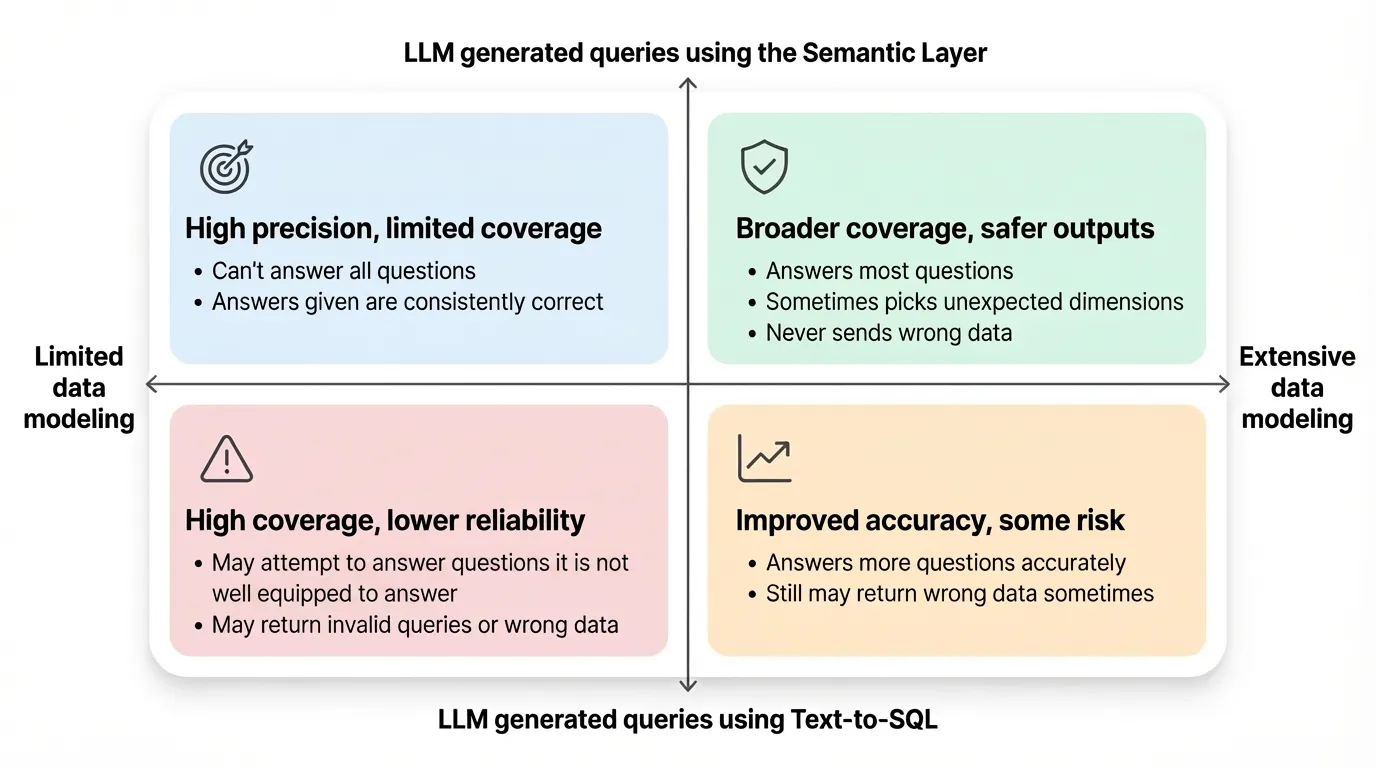
Text-to-SQL accuracy nearly doubled between 2023 and 2026. The semantic layer still wins on determinism. But the real question isn't which benchmark wins — it's an architecture decision about where your business logic lives.

Snowflake Semantic View Autopilot: The Complete Practitioner Guide
Semantic Layer17 min read

Snowflake Semantic View Autopilot: The Complete Practitioner Guide

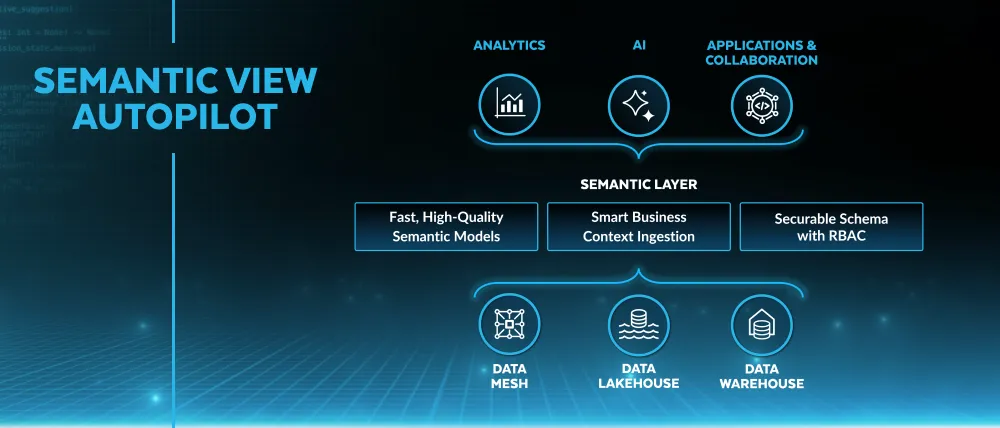
How to get Snowflake Semantic View Autopilot working in production, not just in a demo. The decisions that matter, the limitations nobody mentions, and where SVA fits in your data architecture.

Omni's $120M Series C Puts the Semantic Layer at the Center of AI Analytics
Semantic Layer7 min read

Omni's $120M Series C Puts the Semantic Layer at the Center of AI Analytics

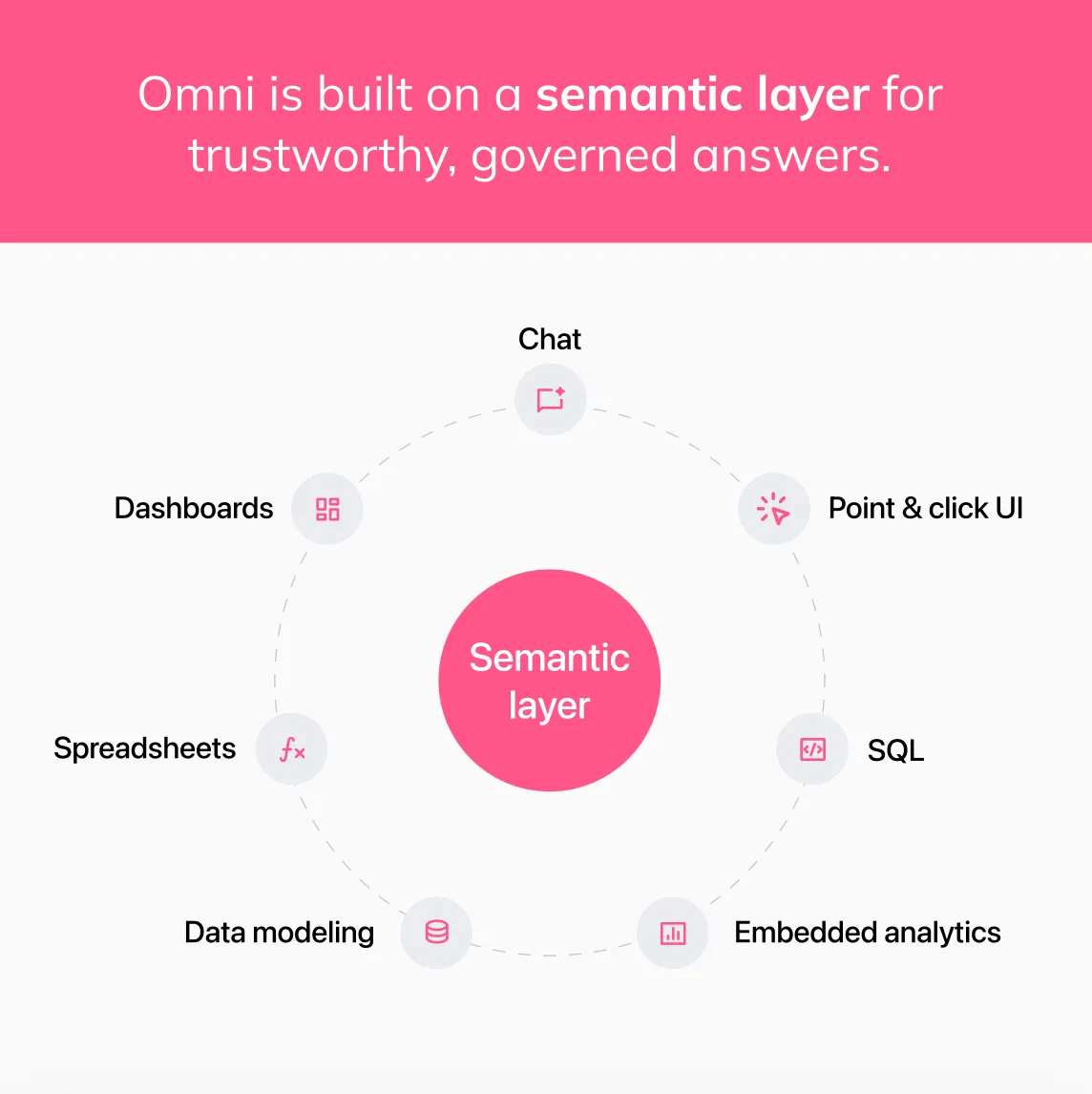
Omni raised $120M at a $1.5B valuation today — with the semantic layer as the explicit center of their pitch and their moat. Here is why the framing matters as much as the number.

Snowflake Semantic Views: The Practitioner's Guide to Setup, Autopilot, and Best Practices
Semantic Layer14 min read

Snowflake Semantic Views: The Practitioner's Guide to Setup, Autopilot, and Best Practices

Snowflake Semantic Views are now the native semantic layer inside Snowflake, powering Cortex Analyst, AI agents, and BI tools from a single governed definition. Here is how to implement them correctly — including Autopilot, dbt integration, and the best practices that matter in production.

Semantic Layer for Multiple BI Tools: The Architecture That Ends Metric Drift
Semantic Layer10 min read

Semantic Layer for Multiple BI Tools: The Architecture That Ends Metric Drift

When you run Tableau, Power BI, and Sigma simultaneously, every metric gets defined three times — and diverges. A semantic layer for multiple BI tools is the only architecture that fixes this without replacing any of them.

Sigma vs Looker: The Semantic Layer Is the Real Decision
Semantic Layer9 min read

Sigma vs Looker: The Semantic Layer Is the Real Decision

Most Sigma vs Looker comparisons debate visualizations and pricing. The actual decision is about the semantic layer — whether you need one, and where it should live relative to your BI tool.

Semantic Layer Consultant: What We Do and When You Need One
Semantic Layer7 min read

Semantic Layer Consultant: What We Do and When You Need One

What does a semantic layer consultant actually do? When does it make sense to hire one versus building internally? And what makes an independent consultant different from the vendors pitching you tools? Here is the honest answer.

dbt Semantic Layer vs Cube: Which Architecture Actually Fits Your Stack
Semantic Layer9 min read

dbt Semantic Layer vs Cube: Which Architecture Actually Fits Your Stack

dbt Semantic Layer and Cube are not interchangeable. One defines metrics. The other defines and serves them. This is the architectural difference that determines which one belongs in your stack.

Best Semantic Layer Tool 2026: A Vendor-Neutral Comparison
Semantic Layer21 min read

Best Semantic Layer Tool 2026: A Vendor-Neutral Comparison

The only vendor-neutral comparison of the best semantic layer tools in 2026. No product to sell. Covers dbt MetricFlow, Cube, AtScale, Snowflake Semantic Views, Databricks Metric Views, LookML, and Omni — organized by architecture fit, not feature score.

The Complete LookML Guide for 2026: Core Concepts and the dbt Migration Decision
Semantic Layer12 min read

The Complete LookML Guide for 2026: Core Concepts and the dbt Migration Decision

A practitioner's guide to LookML in 2026: what views, dimensions, measures, and explores actually do, how LookML compares to the dbt Semantic Layer, and how to make the migration decision for enterprise teams.

Google Officially Separated Looker from Data Studio
Semantic Layer7 min read

Google Officially Separated Looker from Data Studio

Google just reversed the Looker Studio rebrand, reinstating Data Studio for the free tool and keeping Looker exclusively for enterprise governed analytics. For those of us who spent years explaining LookML to confused clients, this is overdue.

The Complete Guide to Every OSI Open Semantic Interchange Participant
Semantic Layer20 min read

The Complete Guide to Every OSI Open Semantic Interchange Participant

A comprehensive guide to every organization in the Open Semantic Interchange initiative. What they do, where they fit, and what it means for your data strategy.

Why Omni's MCP Server Changes How You Query Data in Claude and Cursor
Semantic Layer6 min read

Why Omni's MCP Server Changes How You Query Data in Claude and Cursor

A practitioner's guide to connecting Omni's MCP server with Claude and Cursor. How the semantic layer transforms AI analytics from demo-ready to production-grade.

The dbt Semantic Layer: How MetricFlow Turns Business Logic Into Infrastructure
Semantic Layer7 min read

The dbt Semantic Layer: How MetricFlow Turns Business Logic Into Infrastructure

The dbt semantic layer with MetricFlow lets data teams define business metrics as code. Those definitions flow to any BI tool, AI agent, or analytics platform through a single governed interface.

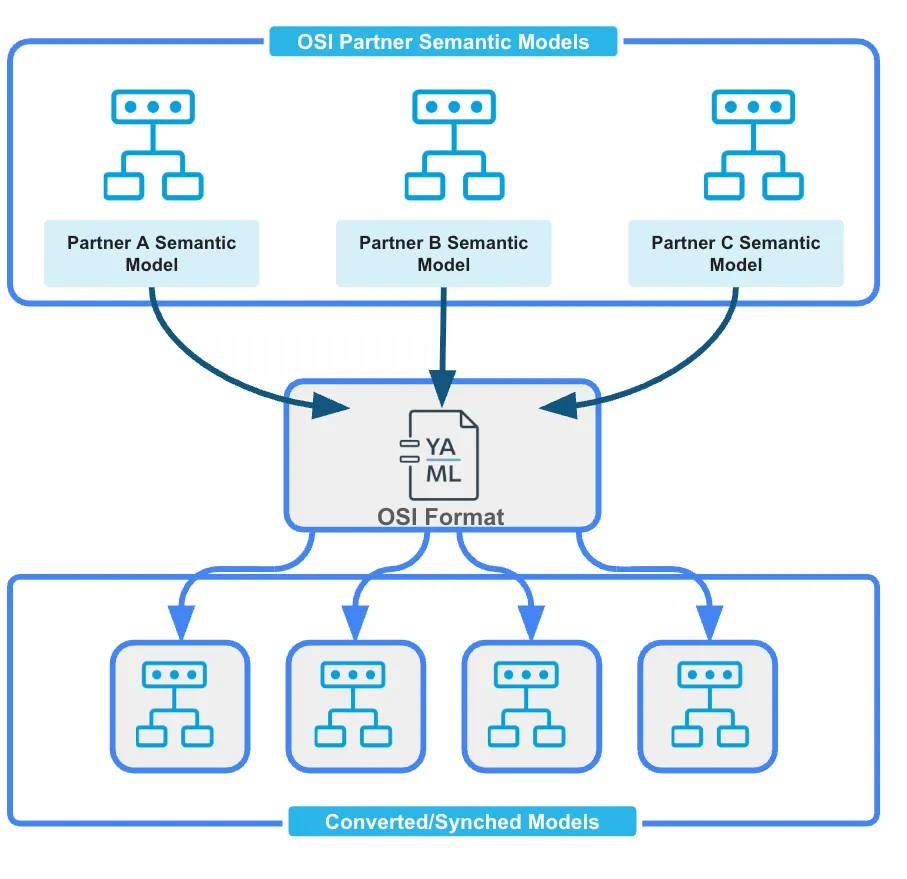
Semantic Interoperability: The Open Standard Connecting Your Entire Data Stack
Semantic Layer9 min read

Semantic Interoperability: The Open Standard Connecting Your Entire Data Stack

Semantic interoperability enables different systems, tools, and AI agents to share business logic consistently. The Open Semantic Interchange (OSI) specification is the vendor-neutral standard making it happen across your entire data stack.

The Semantic Layer Just Became an Industry Standard
Semantic Layer6 min read

The Semantic Layer Just Became an Industry Standard

Snowflake, Microsoft, dbt Labs, Salesforce, and Databricks all converged on the semantic layer as critical AI infrastructure within the same month. The Open Semantic Interchange spec is now the standard.

Semantic Layer BI Tools: Which Platforms Actually Govern Your Metrics
Semantic Layer8 min read

Semantic Layer BI Tools: Which Platforms Actually Govern Your Metrics

A comparison of BI tools with native semantic layers, from Omni and Looker to Domo's new 2026 addition. Evaluate which platform actually governs your metrics for AI readiness.

What Is a Semantic Layer? The Complete Guide for 2026
Semantic Layer26 min read

What Is a Semantic Layer? The Complete Guide for 2026

The semantic layer is the governed translation layer between your raw data and every tool that consumes it. Complete guide: definition, architecture patterns, vendor landscape, and why your AI agents cannot operate without one.

Omni vs Looker: The Complete BI Comparison for 2026
Semantic Layer8 min read

Omni vs Looker: The Complete BI Comparison for 2026

A detailed comparison of Omni vs Looker based on direct implementation experience. Covers features, pricing, migration, and which platform fits your organization.

Ready to build a semantic layer your AI can rely on?

We help ambitious teams design, implement, and maintain semantic layers. Vendor-neutral, from assessment to managed services.